


Recovery Database
Note: Nothing on this page, or on PEF, is medical advice!
Bupropion (Wellbutrin)
-
Bupropion, often marketed as Wellbutrin, is an atypical antidepressant that works differently from SSRIs and SNRIs. It is known to be pro-libido and works via the dopaminergic system. It is also weight-neutral and is used for smoking cessation. The medicine was first synthesized in 1969 in Britain. Ironically, it is is now approved as an antidepressant almost everywhere in the world except the UK.
-
Bupropion primarily blocks dopamine and norepinephrine transporters, increasing synaptic levels of both neurotransmitters. This produces improvements in motivation, reward signaling, energy, and alertness. Unlike SSRIs, it has no significant activity at the serotonin transporter.
-
Dopamine plays a role in motivation, reward, and sexual function. Post-exposure syndromes heavily overlap with one another with symptom patterns suggestive of hypodopaminergia including anhedonia, blunted reward and sexual dysfunction. Bupropions pro-dopaminergic and pro-sexual effects is hypothetically coherent in the treatment of post-exposure syndromes. However, anecdotal evidence depicts a much different picture. While there are some that greatly benefit from Bupropion— others claim to have acquired PSSD from it.
-
Evidence consists solely of anecdotes at this time.
-
The Bupropion database contains 37 entries across three diagnoses:
33 with PSSD
3 with PFS
1 with PAS
Of the entries:
18% had a substantial improvement or better
18% had a mild or moderate improvement
21% had no improvement
The rest experienced worsening, with two of the entries claiming that Bupropion was the culprit for their PSSD
-
Wellbutrin, like most other marketed antidepressants, is claimed to be safe on-paper. However, we at PEF are aware of those who claim to be suffering from PSSD from Wellbutrin, alongside those who crashed from the medication. Therefor, we are not able to guarantee that this medication is safe to try.
Common side effects include:
Insomnia (most common — activating drug)
Dry mouth
Headache
Nausea
Dizziness
Constipation
Increased sweating
Agitation, especially early on
Furthermore, the seizure threshold is lowered while on Wellbutrin. Do not crush or cut tablets. If you suffer from or have a family history of seizures or epilepsy— please consult with a doctor.

Bupropion was synthesized in 1969 but sat unused for over a decade before FDA approval in 1985 — and was then pulled from the market just one year later due to seizure reports, only to be reintroduced in 1989. It is now one of the most prescribed antidepressants in the United States
PEF Official Bupropion Database
Buspirone (Buspar)
-
According to the Mayo Clinic, Buspirone is used to treat certain anxiety disorders or to relieve the symptoms of anxiety.
It is not known exactly how buspirone works to relieve the symptoms of anxiety. Buspirone is thought to work by decreasing the amount and actions of a chemical known as serotonin, particularly at the 5HT1A receptors, in certain sections of the brain.
-
Buspirone works primarily as a partial agonist at 5-HT1A receptors. At presynaptic autoreceptors, activating these inhibitory receptors reduces serotonin release; at postsynaptic receptors, it produces a partial agonist effect. The net result is anxiolysis.
It also has weak secondary activity at D2/D3 dopamine receptors that is less clinically relevant. This activity is thought to contribute less to the therapeutic effect and more to side effects like restlessness.
-
Buspirone is documented in scientific literature to be pro-sexual, and is studies have shown it has alleviated sexual side effects in those currently taking serotonin reuptake inhibitors.
The rationale in post-exposure syndromes stems from speculation that post-exposure syndromes involve altered 5-HT1A signaling or receptor density, and Buspirone's partial agonism could help recalibrate tone.
-
Apart from pro-sexual evidence outlines in scientific literature, evidence consists solely of anecdotes at this time.
-
The Buspirone database contains two separate datasets: one pertaining to Busprione, and another dedicated to Bupropion/Buspirone combination therapy. There are 45 entries two three diagnoses:
42 with PSSD
3 with PAS
Of the entries:
27% had a substantial improvement or better
18% had a mild or moderate improvement
36% had no improvement
The remaining 19% experienced worsening, with two of the entries claiming that Bupropion was the culprit for their PSSD
-
Buspirone has a delayed onset of 2–4 weeks and will not produce immediate anxiolytic effects. It should not be used as a substitute for benzodiazepines in those experiencing withdrawal, as it has no cross-tolerance with GABA-acting drugs. Those taking MAOIs should not use buspirone due to risk of serotonin syndrome. Beyond these pharmacological indications, we at PEF are aware of those who claim to have crashed from the medication. Therefore, we are not able to indicate that this medication is safe to try. Common side effects include:
Dizziness (most common)
Headache
Nausea
Nervousness or restlessness, especially early on
Insomnia or unusual dreams
Dry mouth
Fatigue
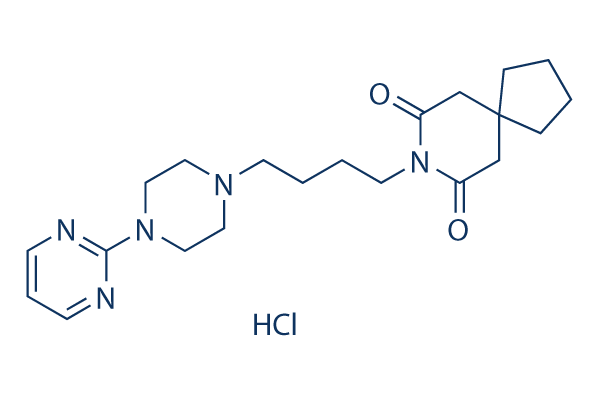
Buspirone was first synthesized in the early 1970s and approved by the FDA in 1986 as an anxiolytic — notably distinct from benzodiazepines in that it carries no dependence risk or sedation. Unlike most anti-anxiety medications, it has no immediate effect; therapeutic benefit typically takes two to four weeks to emerge. Despite a favorable side effect profile, it remains underutilized relative to SSRIs and benzodiazepines, partly due to that delayed onset and partly due to reduced effectiveness in patients with prior benzodiazepine exposure.