

An Unexpected Remission with Bioenergetic Therapy: the Mad Russian
Let me be clear– I, under no circumstances, am anti-establishment medicine despite the fact that I’ve been quite burnt by it. When you ask two people with the same identical condition what their symptoms are and how they manage them– the answers completely diverge from one another. Nevertheless, as it stands today, patients who find themselves struggling with conditions without regulatory approval unfortunately resort to self-experimenting. Medicine hasn’t caught up, insurance is uncooperative, and patients are on their own. This article tells a story of a 13-year-old boy struggling with a rapid onset and ambiguous neuropsychiatric disease in an era where bioinformatics, AI, and the boom of awareness in post-infectious diseases was still years away.
In the autumn of 2013, I started middle school in a well-to-do Boston suburb. I deeply struggled waking up early, and that year I had to wake up an hour earlier than the year before. Although I wasn’t a particularly anxious kid, I was irrationally worried that my classmates that came from the other feeder school would be mean. The first signs of catastrophizing– a trait I picked up from my mother. It was also the first year that I was living without a sibling at home. My sister, who was considerably older than me, had transferred out to the premier state university about a two hour drive west. Before she left, she and my mother would pour water on my face early in the morning when I was sluggish to wake up (and almost always, I was). These factors had set me up to be fatigued and on guard.
Eventually September rolled in and it was time to rip off the bandaid. Even now in my mid-20s, the death of summer brings the same melancholy feeling that it did as a child. In Massachusetts, you can feel its last gasps as the temperature starts oscillating downwards. I hopped on the typical yellow school bus that’s as universal in the states as McDonald’s. We shared the space with 9th graders going to the local high school for their own first day– practically adults to me. Intimidating. We drove through suburbia– single family homes, crumbling sidewalks, and traffic. Sunny lifelessness. I walked into my new school with the warm breeze ruffling through my thick, unkempt hair with little idea of what to expect.
Side note: In retrospect, I think around this age is when kids stop living in the moment by default– sure as hell happened to me. I also think it’s the reason that children are surprisingly resilient at times compared to adults. When the body starts to mature, the brain undergoes so many rapid changes in such a short time.
I wish I could fully articulate what I experienced in that month, or pinpoint an exact moment or trigger that brought on my illness, but memories fade with time and I was not at all disciplined enough to keep a consistent diary. Once October rolled around, I was without a doubt completely transformed. This change was hard on me, but even harder for my parents. Sluggish mornings were replaced with screaming matches between me and my mother that would occasionally turn physical on her part. I was struggling with an all-consuming depression compounded with stubborn, anxious thoughts that I now understand to be OCD. The escalation of symptoms was rapid and severe. Within a few weeks, the depression had such a grip on me that I was considering ending my life. Yeah, it was bad. I don’t really have any other words. School wasn’t any better either. I was struggling to make friends, to keep friends, I was acting out, and I wasn’t being kind to others. The infrastructure in place then wasn’t sufficient to flag me as an at-risk youth. Many of my teachers assumed that I just had a terminal case of a bad attitude. Over the months, my situation continued to deteriorate without any help from my school, my family, or my community. While I can show my younger self some compassion, the way that I treated others still bothers me today. Maggie– if you’re reading this– I’m really sorry I threw a spider at you. That was not okay.
Two years, four hospitalizations, five medication trials, a dozen therapists later (my parents are Soviet-Israeli, and had a habit of always finding me Russian speaking therapists who I had no vibe with– a story for another day). I was in the same rut. I was extremely unpleasant to deal with. I was struggling with OCD thought loops– so I would speak on the same topic for hours, I held grudges, started arguments, and I would almost always run away from school during the day. Yes, literally. I would open the door and run off the property. Alternatively, if it was rainy, I would find somewhere to hide. Around the two year mark, I was already marked as truant by the local authorities. On the first day of school in eighth grade, I refused to leave bed, and was met by a police officer in my living room ready to bring me to school by force if needed.
My parents, at a loss for what to do, decided yet again to try another Russian guy. This one went by the alias “The Mad Russian”, and they told me that he would be different — that he’d worked with dozens of celebrities to fix a myriad of problems. Drew Barrymore, Billy Joel and Courtney Cox— just to name a few. The Mad Russian only worked with adults, and somehow, my parents managed to convince him to give me a shot– an act I’m still grateful for.
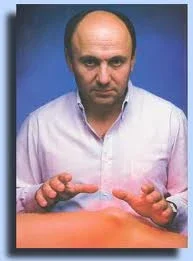
Yefim Shubentsov, aka the Mad Russian, worked with hundreds of thousands of patients over the years. You can read his New York Times article here
The Mad Russian’s real name is Yefim Shubentsov. Despite his work with hundreds of thousands of clients, including several high profile ones, little is known about him. Born in 1940 in what is today Russia, he later immigrated to New York at an unknown time, settling in Brookline, MA around 1980. Shubentsov built a substantial following without any major marketing campaigns for his ‘bioenergy’ healing techniques for a variety of ailments ranging from phobias to addictions. He has never discussed publicly the inner workings of his methods, only claiming that he was gifted with them by someone, or something, as a young man.
Shortly after his arrival in Massachusetts, two psychotherapists from Harvard University — Dr. Douglas Powell and Dr. Henry Babcock — caught wind of Shubentsov's methods and invited him to participate in a formal medical study evaluating his techniques. They found that his healing methods worked for 50% of an unknown sample size of "very difficult" patients. According to Dr. Powell, "Some people are born to be healers, and he may have that in him."
For those who benefited from his techniques, they tended to benefit drastically. A case report of a woman named Miranda Beeson summarizes this quite well. Beeson, who struggled deeply with cigarette addiction, went to Shubentsov for assistance. After a one-on-one session, her desire to smoke completely dissipated.
By this point I was more than two years into a flare-up, and I was giving up hope that things would ever be different for me. My parents drove a good 25 minutes into the city. During the drive, I was insanely irritated without any rhyme or reason, just another neurobiological phenomenon that I didn’t have any answer to. We arrived at an old, brown brick building somewhere between Harvard and Fenway. A relic of Boston’s gritty heyday.
Not long after entering, I found myself sitting shoulder-to-shoulder in a circle among twenty or thirty others in a small office sublet. I had a feeling of unease, as stuck out being considerably younger than everyone else.
When Shubentsov introduced himself, the hum of intermittent chattering around me immediately ceased. He talked about his background, and a tidbit about what he did– not enough to truly understand, but enough to capture interest. His brief introduction quickly devolved into a tangent covering a variety of different topics, some being controversial. When he mentioned that he didn’t believe in ADHD as a real illness– one man got up, walked out, and slammed the door. I had no idea what a college lecture felt like at that point in my life, but it turned out to be a taste of the future. Shubentsov’s speech straddled the fine line between a lecture and a ramble as minutes turned into hours.
Once his introductory speech ended, we were ushered out of the sublet into the hall and asked to wait as we entered one by one. After a few moments, it was my turn. A chair was waiting for me in the middle of the room, and Shubentsov asked me to sit and close my eyes. He asked me: 'Tell me, what is bothering you?' With eyes shut and nervousness fluttering, I responded, 'Ummm, anxiety, and depression and stuff, I dunno…' Before I could elaborate, he took charge of the situation. What happened in the short time between my half-baked response and the end of our meeting is a blur, genuinely gone. I shook his hand, thanked him, and went to wait for my ride home.
I woke up the next day not feeling any better. A week passed– no changes. Still a problem child. Then, I woke up one day a bit before Halloween, and I felt okay– good even. A week passed, I was feeling alright, then a month. A substantial change— dramatic even. Yes, I still struggled with emotional problems and had bad days. However, before the intervention every single day was a bad one. Very quickly, I had shed the truancy status and began to take my studies seriously. My cascade of C-’s became A-’s. I began to think of the future, to plan for high school. Most importantly, I began to catch up in life. I had a two year black hole in my social and personal development. Conflict, joy, sorrow, adventures, life lessons that I didn’t experience properly.
I think that the most important aspect of my recovery was the social-emotional one. I started making friends. As a teenager, my friendships were more fulfilling than the ones I had before the onset of my illness, partly since I had gotten older. They contained depth that I hadn’t yet encountered which made them special. For the first time, I had someone to go to the mall with, to skate with around town. Little things that were a big deal during that small chunk of life where novelty is king.
I wish I could say that Shubentsov’s intervention was a one-and-done type of story where I never fell back into a period of heightened symptoms, but I’d be lying. About a year later I started high school and had my second flare of symptoms. Perhaps it was because I didn’t take the time to develop the tools to cope with chronic stress. Perhaps it was inevitable. I went back a second time about a year-and-a-half after our first encounter and underwent the same rodeo– shoulder-to-shoulder seating arrangement, a lecture-rant hybrid, and one-by-one turns with the man himself. This visit didn’t work. Whether or not a third time would have been a charm will forever remain uncertain. The Mad Russian closed his doors with the first coronavirus lockdowns in 2020, took down his website, disconnected his phone line. According to his unofficial wiki, he is 85 years old as of time of writing, and the odds of him returning to working with patients are slim. Today, I am still piecing together what happened to me then, and what’s happening to me now.
My encounter with an alternative medicine intervention that actually worked at such a formative part of my life taught me not to underestimate unlikely treatments— what could be the silver bullet for your condition may very well be hiding right under your nose. For those of us living with chronic illness and no clearly defined treatment regimen, we are constantly hunting for something that works. Chronic illness makes us feel invisible, especially when our symptoms leave no visible trace. I never expected to find relief in a folding chair in a Brookline office sublet, but there it was.
You can find the full story about my struggle with my chronic illness and why I founded FPES here
